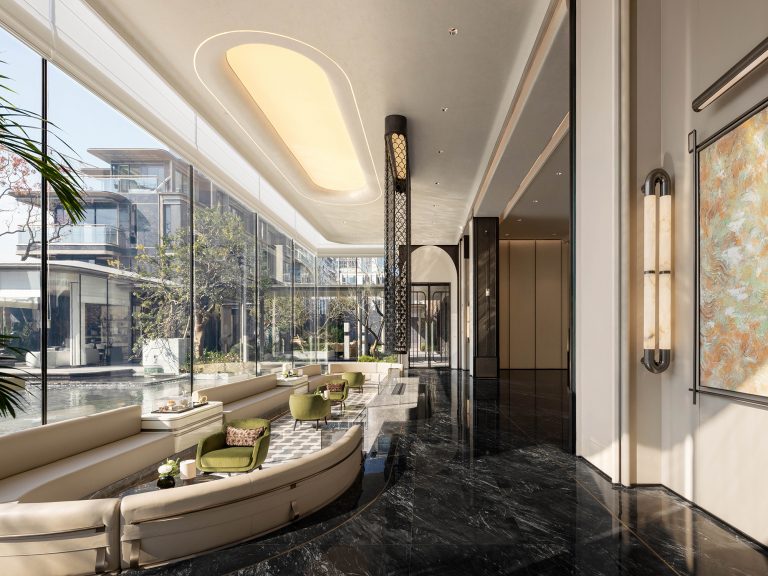
Located in Hangzhou, China, this experience centre designed by GFD Studio features a calm and controlled spatial flow. The entrance lobby sets the tone with a strong axial layout that draws visitors inward. Dark stone surfaces establish a sense of depth, while wood veneers introduce warmth. Soft, diffused ceiling lighting creates a relaxed atmosphere and naturally slows movement. The reception counter, positioned deeper within, acts as a subtle transition point that guides visitors further into the space.
-

- Photo credit: Hanmo Vision / Ye Miao


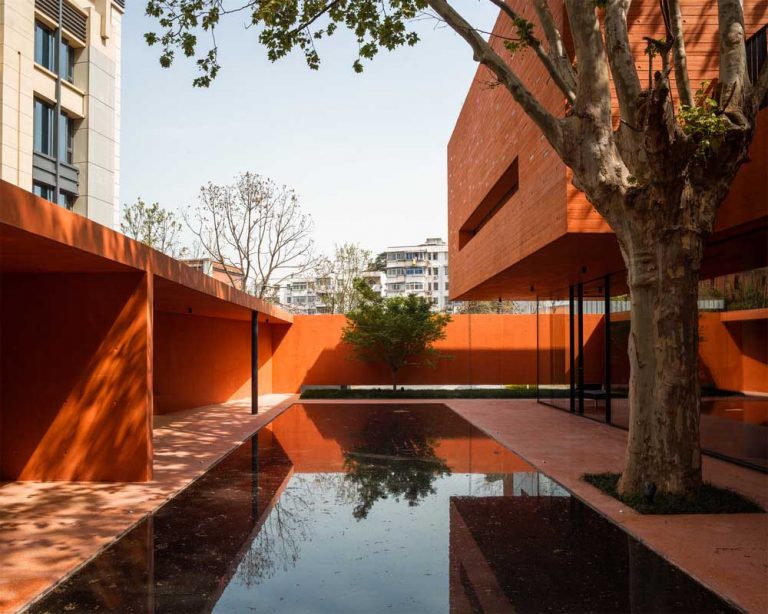
Moving past the foyer, a central bar counter becomes a key focal point. Its rounded form softens the layout, while a green stone countertop adds a distinctive material contrast. Overhead lighting enhances the feature, and a series of arched openings visually connect the interior to a landscaped stone courtyard, balancing solid and open elements. Beyond this, a sunken lounge area strengthens the connection to the central water courtyard. Changes in level are handled through wide steps and integrated seating, allowing for a smooth and continuous flow. A suspended metal screen filters light into the space, while full-height glazing frames views of the courtyard, maintaining a strong visual link between indoors and outdoors.


Water is used throughout the public areas to introduce a sense of rhythm and scale. In the residents’ lounge, a glass façade opens directly to the courtyard. Furniture elements such as low bookshelves, curved sofas, and round tables create a more relaxed and flexible layout, encouraging informal use of the space. The elevator lobby provides a quieter transition space. With a lower ceiling height and restrained material palette, it shifts the focus inward, offering a calm pause between zones.

The elevator lobby provides a quieter transition space. With a lower ceiling height and restrained material palette, it shifts the focus inward, offering a calm pause between zones. At the basement level, the spatial experience becomes more open after a turn at the entrance, revealing a foyer anchored by a circular pendant light. Materials are kept consistent, with subtle variations in texture rather than strong contrasts.
A corridor connects this foyer to the main areas, acting as a transition zone after the stair descent. A vaulted ceiling introduces rhythm and direction, guiding movement forward. At the end of the corridor, a model display is placed centrally for viewing from all sides. Views of rocks and planting outside reinforce the relationship between the model and the actual site, helping visitors better understand the overall development.


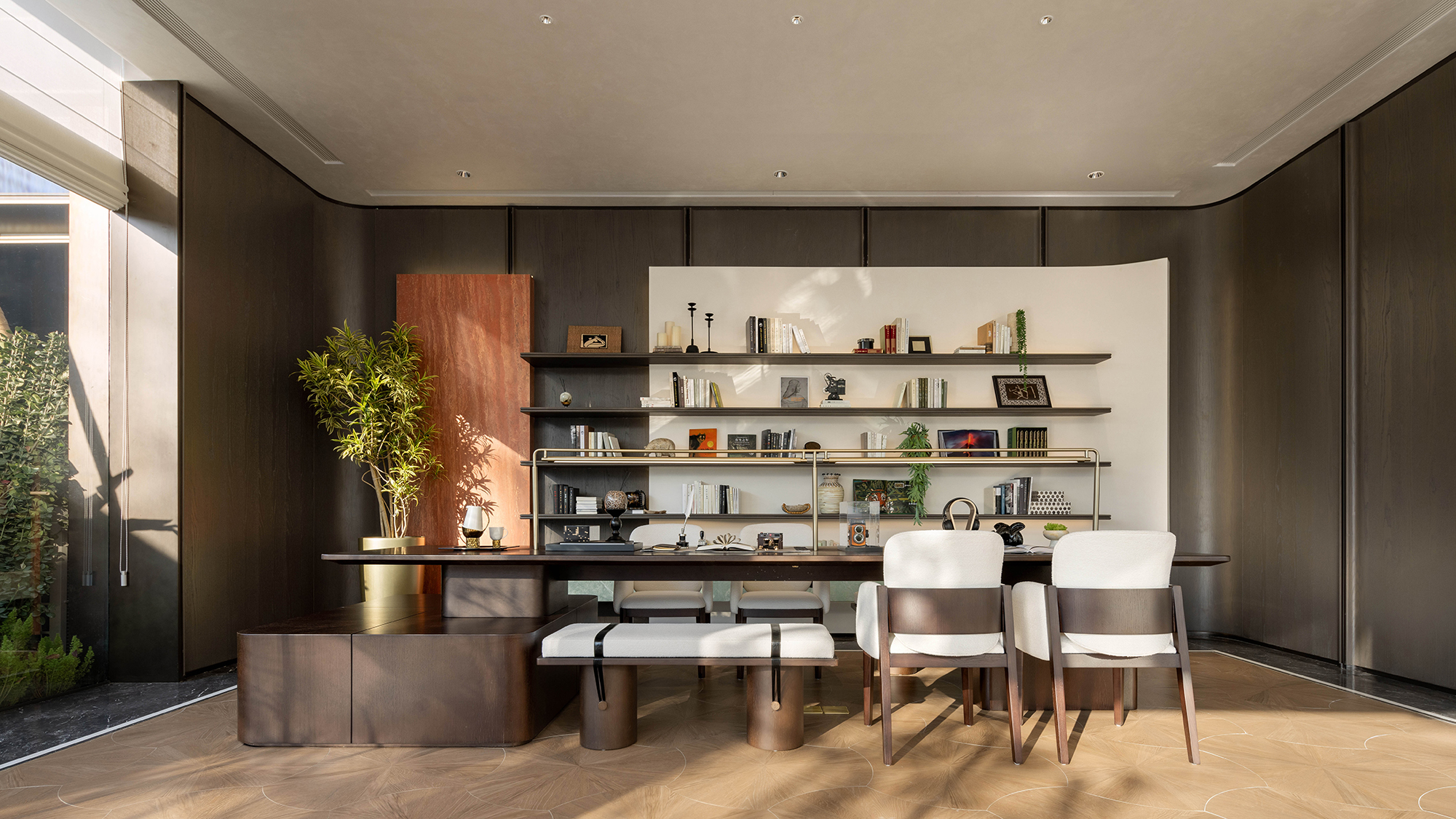
The discussion area is arranged along the courtyard edge, with seating planned to support private discussions. The outdoor view remains present but understated, allowing focus to remain on conversation.
A private banquet room is located in a more secluded part of the basement. Organised around a round table, the space is designed for more focused interaction. Soft finishes and controlled lighting create a refined atmosphere, while full-height glazing offers a contrast between the textured outdoor landscape and the more polished interior.

Throughout, transitions are gradual rather than abrupt, allowing spaces to flow into one another. The design prioritises continuity, comfort, and ease of movement, creating an environment that feels cohesive and adaptable to everyday use.